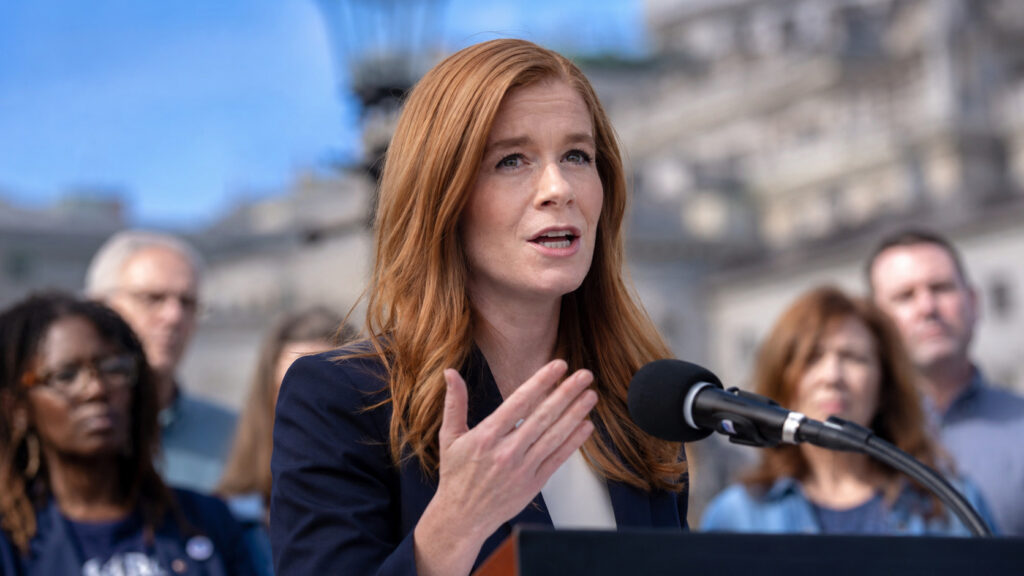
The Michigan Democratic Senate Primary has become a two-person race after state Sen. Mallory McMorrow announced that she is ending her campaign for the Democratic nomination, reshaping one of the country’s most closely watched Senate contests.
McMorrow’s decision leaves U.S. Rep. Haley Stevens and former public health official Abdul El-Sayed competing for the nomination ahead of Michigan’s Aug. 4 Democratic primary. The winner will likely face Republican Mike Rogers in the general election for the open U.S. Senate seat currently held by retiring Sen. Gary Peters.
The race is attracting national attention because Michigan is expected to play a major role in determining which party controls the Senate after the 2026 elections.
McMorrow Announces Her Exit
McMorrow confirmed her decision in a video posted on social media, thanking supporters for their efforts throughout the campaign while emphasizing the importance of Democratic victories in November.
Although she stepped away from the race, McMorrow stopped short of endorsing either of the remaining Democratic candidates. Instead, she pledged to support whoever wins the party’s nomination.
She also renewed her call for Democratic leaders to embrace political change, arguing that many voters are looking for a new direction within the party.
Her withdrawal comes just days before a scheduled Democratic primary debate, which will now feature only Stevens and El-Sayed.
Haley Stevens and Abdul El-Sayed Become the Remaining Candidates
McMorrow’s departure immediately shifts attention to the two remaining contenders.
Stevens, a four-term member of Congress, has earned support from several Democratic leaders and is widely viewed as the preferred choice of many establishment figures within the party. Following McMorrow’s announcement, Stevens praised the departing candidate for her work in Michigan politics and her advocacy on behalf of families and children.
Michigan Attorney General Dana Nessel also endorsed Stevens after McMorrow exited the race, giving Stevens the backing of one of the state’s highest-profile elected Democrats. Meanwhile, Gov. Gretchen Whitmer has not publicly endorsed a candidate.
El-Sayed, who previously sought Michigan’s governorship and has aligned himself with the party’s progressive wing, also responded respectfully to McMorrow’s decision. He commended her efforts and encouraged her supporters to join his campaign.
Why the Race Matters
The Michigan Democratic Senate Primary carries significance well beyond state politics.
With Sen. Gary Peters retiring, Democrats are defending an open Senate seat in a state that has frequently decided closely contested national elections. Republicans view the seat as one of their best opportunities to expand their Senate representation, while Democrats consider it essential to their efforts to remain competitive nationally.
Former Congressman Mike Rogers is expected to secure the Republican nomination after narrowly falling short in Michigan’s 2024 Senate race. Political observers from both parties consider the eventual Democratic nominee’s ability to compete against Rogers a key factor in the general election.
McMorrow’s Campaign Faced Growing Challenges
McMorrow entered the Senate race with considerable national attention.
She first became widely known following a widely viewed speech in the Michigan Legislature in 2022 responding to accusations made by a Republican colleague during debates over education and cultural issues. The speech elevated her national profile and led to appearances at major Democratic events, including the party’s 2024 national convention.
Her Senate campaign also attracted endorsements from prominent Democratic figures, including Sens. Elizabeth Warren and Chris Murphy, as well as former Vermont Gov. Howard Dean.
Despite that early momentum, McMorrow struggled to separate herself in a divided Democratic field. As the campaign progressed, speculation increased that she might eventually suspend her bid.
Her opponents also criticized changes in her positions on issues such as corporate political donations and the Israel-Hamas war. Additionally, previously deleted social media posts criticizing aspects of rural Midwestern life resurfaced during the campaign, prompting renewed scrutiny. McMorrow later defended herself by saying the posts reflected her authenticity rather than political calculation.
Democratic Primary Now Enters Its Final Stretch
With McMorrow no longer in the race, the Democratic contest enters a new phase focused on the contrasting approaches offered by Stevens and El-Sayed.
Stevens is expected to continue emphasizing her congressional experience and support from established Democratic officials, while El-Sayed is likely to campaign on progressive policy priorities that have gained traction in several recent Democratic primaries across the country.
The upcoming debate now becomes an important opportunity for both candidates to make their case to Michigan voters before early voting and the Aug. 4 primary.
Looking Ahead
Michigan voters will choose the Democratic nominee on Aug. 4, setting up what is expected to be a highly competitive general election later this year.
The outcome could influence the balance of power in the U.S. Senate, making Michigan one of the most closely watched battlegrounds of the 2026 election cycle.
As the field narrows, attention will now focus on whether Stevens’ establishment support or El-Sayed’s progressive coalition proves more successful in securing the Democratic nomination—and who is best positioned to face Republicans in November.